
LANA Philosophy: An Architecture for the Whole Child
Methodology that nurtures a generation of children who think holistically, feel deeply, and act consciously.

Introduction: The Philosophy of Our Approach
Imagine education not as a conveyor belt delivering a standard set of knowledge to a child, but as the careful work of an architect helping them build their own unique and beautiful home. A home where the deep roots of family values and a solid foundation of well-being support the high arches of a flexible intellect and boundless creativity.
The LANA Approach is precisely this kind of architecture. It is a holistic educational system built on the harmonious balance of two principles — the “Two Wings of a Whole Personality.”
- The Roots (Being & Feeling): This is the child’s inner world: self-awareness, emotional intelligence, connection to nature, empathy, human values, and inner harmony. These roots form the foundation of psychological resilience and well-being.
- The Wings (Doing & Knowing): This is how the child expresses themselves in the outer world: a flexible mind, systems thinking, curiosity, innovation, and the ability to set and achieve goals. These wings are the engine of progress and self-realization.
Only when the roots are deep and the wings are strong is a high, free, and conscious flight into life possible.
Our goal is to raise a generation of creators of their own reality — people who do not simply adapt to the future, but confidently and responsibly shape it.
Every sturdy home begins with roots that reach deep into the earth and a reliable foundation. For a child, this foundation is their family and their health.
Roots & Foundation: Family and Holistic Well-being
Family as the Primary Source
We deeply believe that education is a partnership. The family is a child’s first and most important teacher. Our role is not to replace the family, but to support and extend it. We create a space where the cultural traditions and roots of every family are valued and respected, because knowing “where I come from” forms the basis of self-respect and openness to other cultures.
Example: We regularly hold Cultural Days, where families share their traditions, prepare national dishes, bring music, and tell stories. This helps children feel proud of their heritage while developing a genuine interest in the diversity of the world.
Psychological Health
Our highest priority is to create a truly safe space where every child feels seen, heard, and accepted. We do not suppress emotions; we teach children to recognize, name, and understand them.
Example: Instead of saying, “Don’t cry,” our educator sits beside the child and says, “I see you’re very upset that your tower fell down. That is really sad. Let’s take a breath together, and then we can decide if you would like to build a new one.”
We also use an emotion wheel and special cards to help children who find it difficult to express their feelings verbally.
Healthy Nutrition
We see food not simply as fuel, but as information for the body and the brain. Our menu, developed together with nutrition specialists, includes high-quality, natural ingredients that support cognitive function, emotional balance, and steady energy for exploration — not hyperactivity.
Example: Children do not just receive ready-made meals; they participate in preparing them. They wash vegetables for salad, help knead dough for gluten-free bread, and make smoothies. They see how delicious meals come from simple, whole ingredients and learn to value healthy food. We completely exclude refined sugar and heavily processed products.
A Rich Sensory Environment
We consciously use sensory experiences to support children’s emotional balance, brain development, and fine motor skills. This goes beyond scents — it includes everything children can touch, feel, and explore.
Example (Tactile Experience): We provide sensory bins filled with materials such as kinetic sand, beans, smooth stones, and water for free exploration. Instead of plastic toys, we prioritize natural materials — wood, wool, linen, and clay. Children also walk barefoot on orthopedic mats with varied textures.
Example (Scents): In our quiet area, we may use a diffuser with lavender essential oil to encourage relaxation. Before activities that require concentration, a light citrus scent can gently stimulate alertness and focus.
The Supporting Walls: Language and Personalized Learning
The walls of a home create its structure and define its space. In our methodology, these walls represent language as a tool for thinking and a personalized approach to understanding the world.
Language as a Tool
Mastery of language gives children the ability to shape their inner world into thoughts and ideas that others can understand.
The Value of Bilingualism
Research shows that learning a second language at an early age significantly supports brain development. It strengthens cognitive flexibility, enhances problem-solving skills, and lays the foundation for empathy and global thinking.
Inquiry-Based Learning
Learning begins not with the teacher’s answer, but with the child’s question. We guide children in developing their own small research projects, through which they construct knowledge themselves rather than receiving it ready-made.
Example: We don’t say, “Today’s topic is insects.” Instead, we notice that the children are fascinated by a ladybug during a walk and help them begin a full project: “What is the world of a ladybug like?”
Through this project, they explore biology, mathematics (counting the spots), and art (drawing and observing details).
Personalization Through Ethical Technology
At LANA, Artificial Intelligence (AI) is an educator’s assistant that helps adapt tasks to each child’s pace and interests, freeing the teacher’s time for what matters most: live, human connection.
Example: An adaptive program on a tablet may notice that a child confidently handles simple counting but finds number combinations that make 7 more challenging. The system then offers engaging games specifically focused on this skill, allowing the child to strengthen their understanding at their own pace.
“Brain Gymnastics”
We actively use exercises that support interhemispheric coordination, concentration, and flexible thinking.
Example: Children perform an exercise where the right hand draws a circle in the air while the left draws a square. This directly trains the brain’s ability to coordinate, multitask, and think systematically.
The Living Space Within: The Power of Free Play
The most important part of a house is not the walls, but the living space between them. In education, this is free play.
Play as the Primary Mechanism of Learning: We see play not as a “break” between lessons, but as the most important lesson of all. From a neurobiological perspective, it is in free, child-initiated play that the fundamental skills for the 21st century are forged.
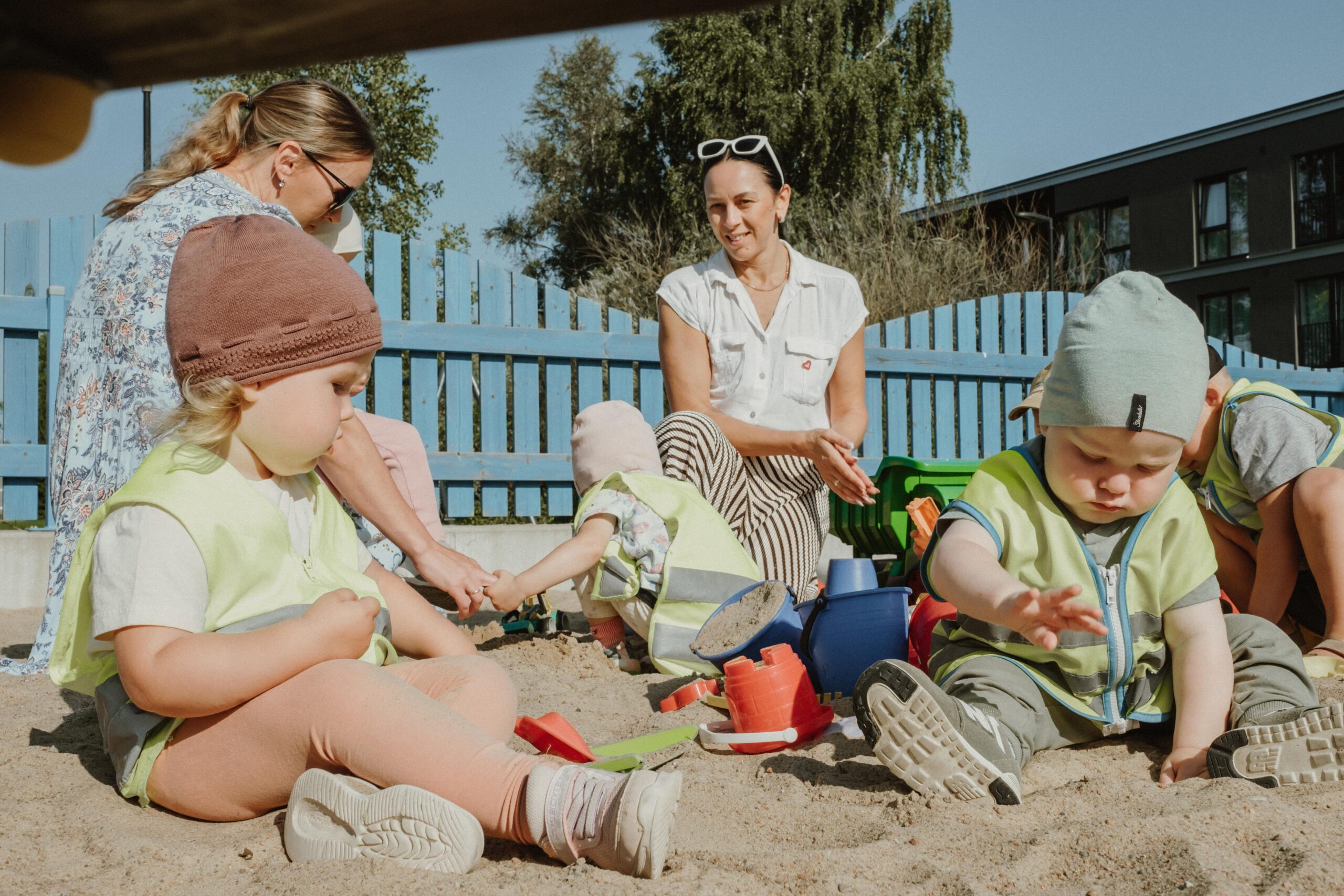
Example: While building a sandcastle together, children aren’t just playing. They are learning to negotiate (communication), figure out how to make a wall stronger (critical thinking), invent stories (creativity), and handle frustration if it collapses (emotional regulation).
The Surrounding Landscape: Integration with Nature
A home cannot exist in a vacuum. Nature at LANA is not scenery; it is a full participant in the educational process.
Nature-Based Learning: Regular contact with nature is proven to reduce stress, improve concentration, and stimulate creativity.
Example: We learn about symmetry by examining a maple leaf and practice counting by collecting and sorting pinecones. This way, knowledge becomes not abstract, but deeply felt, fostering a loving relationship with the world.
The House Rules: Conscious Freedom and Global Citizenship
Even the most beautiful home needs rules to make life comfortable and safe for everyone. At LANA, we teach the art of being a free and responsible citizen—of one’s home, city, and the world.
Freedom is Responsibility: We explain that freedom is the power to choose and the responsibility for the consequences of that choice. My freedom ends where another person’s begins.
Example: If one child wishes to be alone, their freedom is the right to solitude. The freedom of other children is to respect that boundary.
Global Citizenship: Building on respect for their own roots and mastery of languages, we nurture a “global citizen” mindset in children. This is not a political term but a way of thinking: understanding that we all share one planet and that diversity is our strength.
Outcome: The Portrait of a LANA Graduate
A LANA graduate is a whole person with deep roots and wide wings. They are a young creator, ready to build their own amazing reality with love and consciousness, and to make a positive contribution to our shared world.
Scientific and Philosophical Foundation
- Constructivism and Social Interaction: Jean Piaget, Lev Vygotsky.
- Humanistic Psychology and Self-Actualization: Carl Rogers, Abraham Maslow.
- Learning by Doing: John Dewey.
- Theory of Multiple Intelligences: Howard Gardner.
- Neuroscience, Music, and the Brain: Tatyana Chernigovskaya.
- The Importance of Free Play: Stuart Brown, Peter Gray.
- Emotional Intelligence: Daniel Goleman.
- Global Citizenship and the Learner Profile: The International Baccalaureate (IB) Organization.